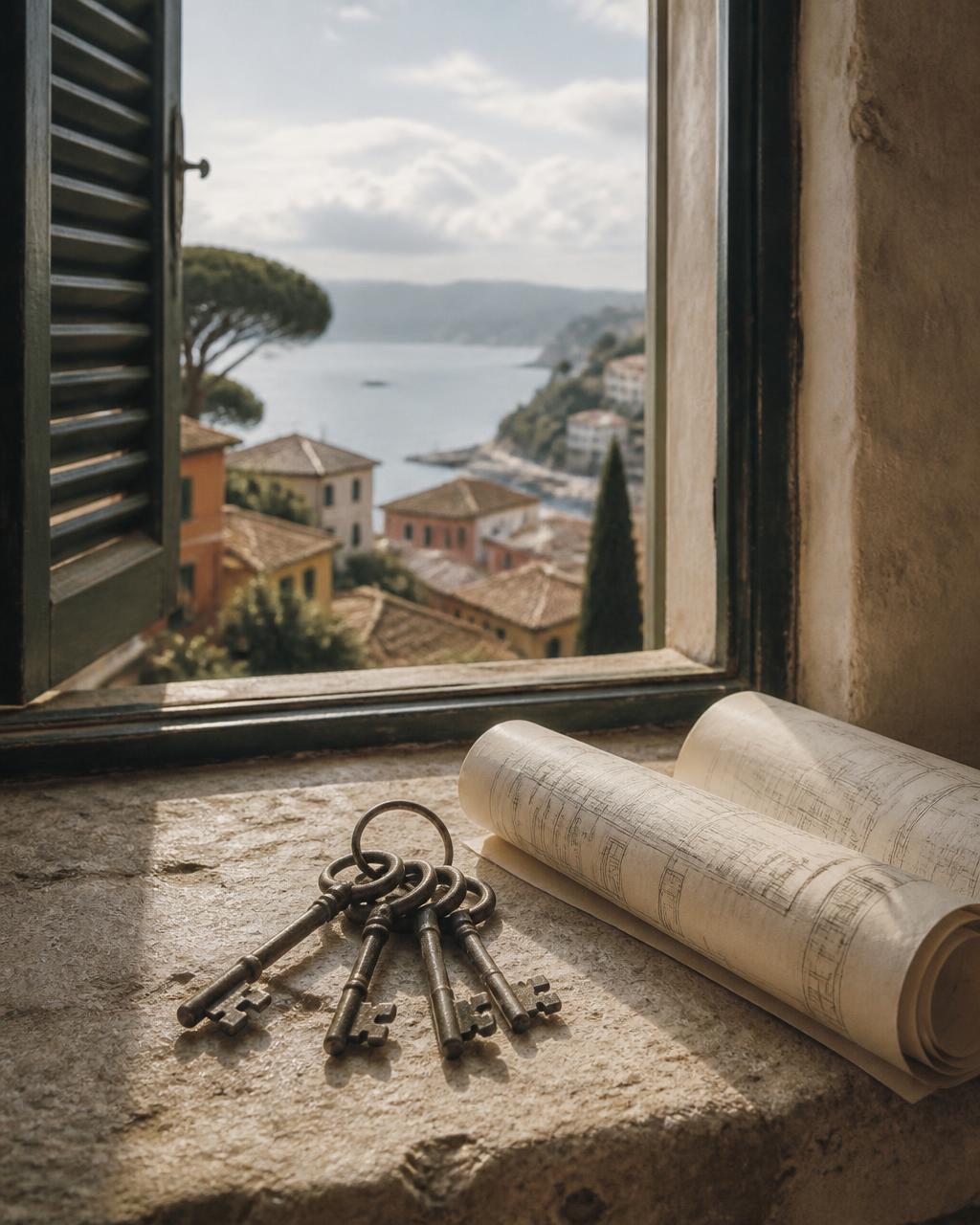

← Bellacasa JournalIssue No. 3
Old iron keys and rolled drawings on a stone windowsill
BellacasaJournal

Issue No. 3  ·  2027  ·  The handbook

Everything that happens between the daydream and the keys

Costs, contracts, permits, taxes and visas, written for people buying from outside Italy. No romance, no jargon, no surprises at the notary's table.

Buying a house in Italy is not difficult. It is unfamiliar, which is a different problem, and it is the reason most things go wrong.

The legal framework is solid. A notary, a public official rather than your lawyer, sits at the centre of every sale and will not sign a deed that does not hold up. Foreign buyers face no surcharge, no minimum price and, for most nationalities, no restrictions at all.

What catches people out is everything around the deed. The building that does not match its own plans. The deposit that is legally binding in a way it is not at home. The renovation grant you cannot actually claim. The eleven percent of costs that nobody mentioned until the week before completion.

This guide walks the whole route, in the order it happens. Read it once before you start looking, and again before you make an offer.

01Chapter one

Can you buy at all?

Almost certainly yes, and on the same terms as an Italian. This is the shortest chapter in the guide for a reason.

Italy places very few restrictions on foreign property buyers. There is no foreign buyer surcharge, no minimum purchase price, and no approval process to clear before you start looking.

EU and EEA nationals have full parity with Italian residents. Non-EU citizens who already hold Italian residency are treated the same way. Everyone else buys under the condition of reciprocity, meaning Italy permits it if your country permits Italians to buy there. In practice most major nationalities qualify, including the United States, the United Kingdom, Canada, Australia, Switzerland and Japan. Your notary verifies this before completion, so it is checked properly rather than assumed.

The one document you need first

The codice fiscale is the Italian tax code. Nothing happens without it. You cannot sign a deed, open a bank account or set up a utility contract until you have one.

It is free. You obtain it from the Agenzia delle Entrate in Italy or from an Italian consulate in your own country. Apply for it before you start viewing seriously, because good properties in small markets move faster than consular appointments.

What buying does not give you

Owning property in Italy does not grant residency, and it does not extend your right to stay. A non-EU citizen without a visa is still limited to ninety days in any hundred and eighty inside the Schengen area, house or no house. If you intend to live there for longer, that is a separate application and it is covered in chapter eight.

02Chapter two

What it really costs

Budget roughly ten to eleven percent on top of the purchase price. Then understand why one of those percentages is much smaller than it looks.

Four things sit on top of the price: transfer tax, notary fees, agency commission, and a handful of small fixed duties. Together they usually land between ten and eleven percent of what you pay for the house.

Transfer tax, and the number it is calculated on

Buying a resale home from a private seller, you pay registration tax, the imposta di registro. It is nine percent as a second home, or two percent if you qualify for prima casa first home relief, which generally requires you to register residency in the municipality within eighteen months.

Here is the part that surprises people, in a good way. On a residential resale bought by an individual, you can request prezzo-valore pricing, which means the tax is calculated on the cadastral value rather than the purchase price. Cadastral values typically sit at half to two thirds of market value. So nine percent of a cadastral value of 120,000 euro on a house you bought for 300,000 is 10,800 euro, not 27,000. The effective rate against the real price often works out closer to four to six percent.

Buying new from a developer works differently. VAT applies instead, commonly ten percent, or four percent with first home relief, and twenty two percent on properties in the luxury cadastral categories.

Everyone else at the table

The notary is required by law and typically charges one to two and a half percent, with the percentage running higher on lower value properties. Agency commission is usually two to four percent plus twenty two percent VAT, and unlike most countries both buyer and seller pay a share. It is negotiable, and our advice is to negotiate it. Cadastral and mortgage taxes on a second home purchase are fixed at fifty euro each. Stamp duty and registry fees add a few hundred more.

Watch this

Notaries are normally paid by assegno circolare, a banker's draft drawn on an Italian bank. That means your funds need to be inside the Italian banking system, cleared, several days before completion. This is one of the most common causes of a delayed rogito, and it is entirely avoidable.

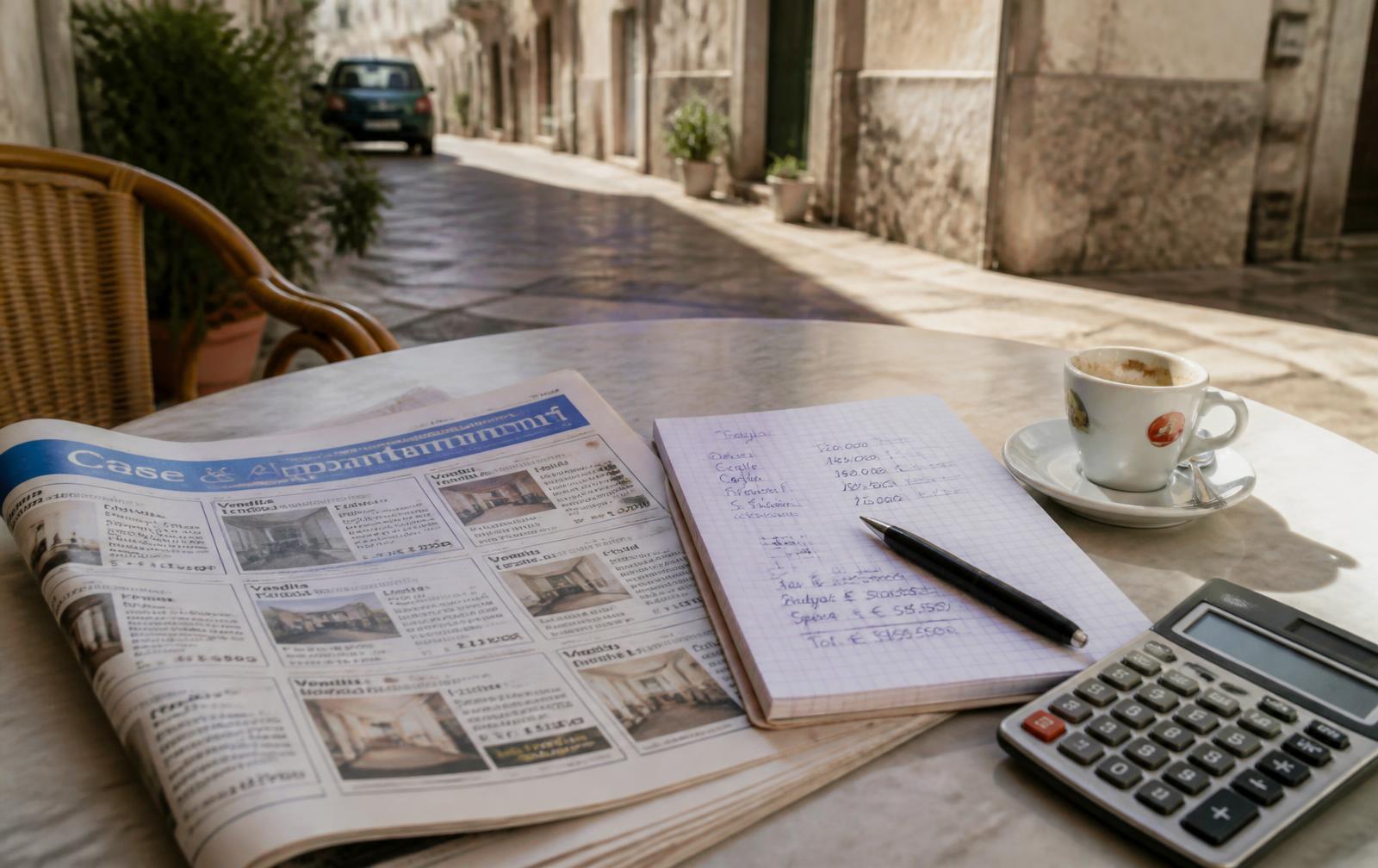
Property listings, a notebook of numbers and an espresso on an Italian café table
The price on the listing is rarely the price you pay — budget around eleven percent on top of it.
03Chapter three

The purchase, step by step

Three documents, in this order. The second one is the one that binds you, not the third.

Italian conveyancing is notary driven and well documented. The notary is a public official, neutral between the parties, whose job is to verify title and register the transfer correctly. The notary is not your representative and does not negotiate for you. If you want someone on your side of the table, that is a separate appointment.

  1. 01Proposta d'acquisto

    The written offer, usually through the agent, accompanied by a small deposit held in escrow. Once the seller signs it, you are committed. Put a deadline on it and put your conditions in it, financing, survey, planning checks. Verbal conditions do not exist.

  2. 02Compromesso

    The binding preliminary contract, typically signed two to six weeks later, with a deposit of ten to twenty percent. It is registered with the tax authority. This is where the real negotiation happens and where every condition must appear in writing.

  3. 03Rogito

    The final deed, signed in front of the notary, usually one to three months after the compromesso. Balance paid, keys handed over, transfer registered. If you do not speak fluent Italian, an official interpreter is required and the deed may be drawn bilingually.

Watch this

If you cannot attend in person, you can complete through a power of attorney, a procura, granted to someone in Italy. It must be drawn up correctly, apostilled and sworn translated, and that process takes weeks rather than days. Decide early whether you are flying in.

Documents and a seal on the desk of an Italian notary
The deed is signed in Italian, in front of a notary. Everything you agreed has to be in that document.
04Chapter four

The five things that go wrong

None of these are rare. All of them are cheaper to find before the deposit than after.

1. The building does not match its own plans

Discrepancies between the cadastral record and the physical building are the rule rather than the exception in Italy. A veranda enclosed in the seventies, a window moved, a room divided, an outbuilding that appears on no drawing. These have to be regularised before a deed can be signed cleanly, through a sanatoria if the work is legalisable. Sometimes it is a formality costing a few hundred euro. Sometimes it is not legalisable at all.

2. Twelve people own it

Inherited property with multiple co-owners is extremely common in southern villages, and every single owner must consent to the sale. One cousin in Argentina who does not answer letters can stop the purchase indefinitely. Ask who is on the title at the first viewing, not the fifth.

3. You are not allowed to change it

A historic centre, a national park or a landscape protection order often means windows, roofline, facade colour and materials are fixed. This is usually good for the town and expensive for your plans. Find out what the local rules permit before you fall in love with a photograph of a glass extension.

4. The seismic zone changes the sum

Italy classifies every municipality by seismic risk, and the classification drives structural requirements on anything that touches the load bearing frame. The difference between a low risk and a high risk zone can be tens of thousands of euro on an identical renovation. It is public information. Look it up before you offer.

5. There is nobody to do the work

In depopulating areas the constraint is not money, it is finding a builder with capacity inside a reasonable timeframe. Before you buy in a small village, ask locally who actually works there and how booked they are. A cheap house you cannot renovate for two years is not cheap.

Watch this

A property survey is not standard practice in Italy the way it is in the UK or the US. Nobody will suggest it. Commission a geometra or architect yourself, before the compromesso, and treat it as part of the purchase cost rather than an optional extra.

05Chapter five

Money across borders

The tax is the easy part. Moving the funds is where the delays are.

An Italian bank account

You do not strictly need one to buy, but you will want one immediately afterwards for utilities, IMU and local direct debits. Opening one as a non-resident is possible at most banks with a codice fiscale, a passport and proof of address, though the process is slower than you expect and some branches are considerably more used to foreign customers than others.

Transferring the funds

On a purchase of a few hundred thousand euro, the exchange rate spread on a standard bank wire can cost more than the notary. Currency specialists and multi currency accounts usually save two to four percent against a high street bank's retail rate. Compare before you send, and send early: the balance must be cleared in Italy before completion, and the notary will normally want a banker's draft.

Mortgages for non-residents

Italian banks do lend to non-residents, but on tighter terms. Expect a loan to value around fifty to sixty percent against seventy five to eighty for a resident, and a longer, more paperwork heavy process. Add roughly one to two percent of the loan for arrangement fees, valuation and the compulsory property insurance, plus mortgage registration tax.

Two practical notes. Very old rural properties and unregularised buildings are often simply not mortgageable, so a renovation project may need to be a cash purchase. And a mortgage will not usually complete inside the timescale of a compromesso unless you started the application before you made the offer.

Watch this

If you are a US taxpayer, an Italian bank account may trigger FBAR and Form 8938 reporting obligations. That is a compliance question, not a tax bill, but it is not one to discover in April.

06Chapter six

Renovating it

Most foreign buyers are buying a project, whether or not they realise it at the time. Here is how the permits work, what it costs, and which incentives are shrinking.

The permit ladder

Italian building permissions run in tiers, and which tier applies is a technical judgement your geometra or architect makes, not a choice you get to prefer.

Free works, edilizia libera, cover ordinary maintenance: repainting, replacing fittings like for like. No filing required. A CILA covers extraordinary maintenance that does not touch the structure, so most internal reconfigurations, plumbing and electrics. A SCIA is needed once you touch structural elements or change the building's shape and volume. A permesso di costruire is required for substantial reconstruction, volume increases and new builds, and it goes through the municipality with real approval time.

Anything inside a protected historic centre or a landscape constrained area also needs a separate authorisation from the heritage office, the Soprintendenza, and that runs on its own timetable regardless of what your builder promises.

What it costs

As a working range, a light cosmetic refresh runs roughly 400 to 700 euro per square metre. A full renovation with new systems, bathrooms, kitchen and finishes runs roughly 900 to 1,600. A structural restoration of an old stone building, with roof, foundations and seismic work, runs from 1,500 upward and can exceed the purchase price of the house.

Add ten to fifteen percent for professional fees and municipal charges, and a contingency of at least fifteen percent on anything built before 1960. Old buildings hide things.

The incentives, and the 2027 cliff

Italy's renovation deductions were levelled in 2025 and held through 2026 at fifty percent for a property that is your registered principal residence and thirty six percent for second homes and other residential property. The spending cap is 96,000 euro per unit, recovered in ten equal annual instalments. The same two rates apply to the Ecobonus for energy work and the Sismabonus for seismic upgrading. The Superbonus is gone.

From 1 January 2027, barring further extension, the rates fall again, to thirty six percent for a principal residence and thirty percent for everything else. If your project has flexibility on timing, that difference is worth modelling properly.

The thing nobody tells foreign buyers

These are deductions against Italian income tax, taken in ten annual instalments. If you are not an Italian tax resident and have no Italian taxable income, you may have nothing to deduct them against, which makes them worth zero to you. Ask your commercialista this specific question before you build a budget around a percentage.

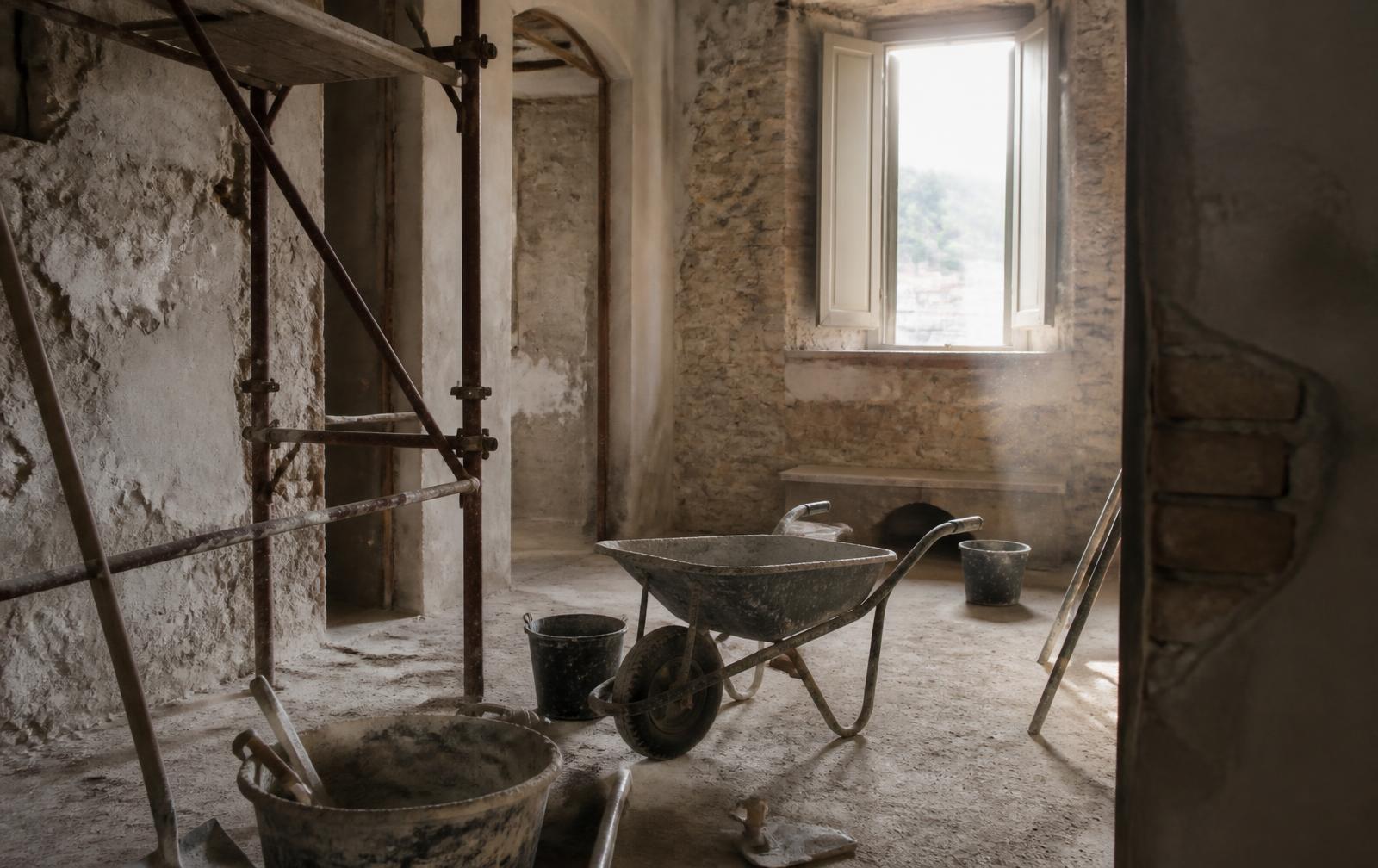
Renovation site inside an old Italian stone house with scaffolding and lime buckets
Renovation begins with what is already there: old walls, damp, and drawings that may not match the building.
07Chapter seven

Owning it

The annual cost of an Italian second home is lower than most people fear, and the admin is higher.

The two annual taxes

IMU is the municipal property tax. Primary residences are generally exempt, but a foreign owner's holiday house is by definition not a primary residence, so you pay it. The rate is set by the municipality and applied to the cadastral value, which is why that number matters twice. It is paid in two instalments, mid June and mid December, and it is your responsibility to calculate and pay it. Nobody sends you a bill.

TARI is the waste collection charge, also municipal, also owed even if the house sits empty for most of the year. Register with the comune after purchase.

Running costs

Utilities need contracts in your name, which needs the codice fiscale and usually an Italian bank account for direct debit. If the property is in a condominio you also pay building charges, and you get a vote at the assembly, which is worth attending at least once for the anthropology.

Insurance is not compulsory for an owner without a mortgage, but an unoccupied house in an area with winter storms or seismic risk is a poor place to save two hundred euro.

Renting it out

Residential rental income can be taxed under cedolare secca, a flat substitute tax of twenty one percent that replaces progressive income tax on that income. Short term holiday letting has its own rules, including regional registration requirements and tourist tax collection, and these vary considerably by region and have been tightening. Check the local rules before you build a yield model.

Watch this

For estates opened from 1 January 2025, heirs calculate and pay Italian inheritance tax themselves rather than waiting for an assessment. Italian succession law also applies forced heirship rules to Italian property in many cases. If you have a blended family or specific intentions, take advice on this while you are buying, not later.

08Chapter eight

Living there

Owning the house and being allowed to live in it are two entirely separate processes.

If you hold an EU passport

You move. Register your residency at the comune once you are staying more than three months, and you are done. Everything below applies to non-EU citizens.

The elective residency visa

The main route for retirees and the financially independent. It requires stable passive income from outside Italy, with a legal floor of roughly 31,000 to 32,000 euro a year for a single applicant and around 38,000 for a couple, plus more for dependants. In practice many consulates, particularly in North America, apply higher internal benchmarks, so budget above the minimum.

The critical word is passive. Pensions, dividends, rental income and investment returns qualify. Employment does not, and neither does remote work for a foreign employer, even online. That prohibition is broad and it is enforced. You will also need proof of accommodation in Italy, which your deed satisfies, and health insurance for the first year.

The seven percent regime

If you receive a foreign pension, have not been an Italian tax resident for the previous five years, and move to a municipality of under 20,000 inhabitants in Abruzzo, Molise, Campania, Basilicata, Puglia, Calabria, Sicily or Sardinia, you can elect a flat seven percent tax on all foreign sourced income for up to ten years.

It is a genuinely significant benefit and it materially changes where in Italy it makes sense to buy. It also has conditions worth confirming case by case, particularly around which pension vehicles qualify.

Other routes

The digital nomad visa exists for qualified remote workers meeting an income threshold. There is a flat annual tax regime for new residents with substantial worldwide income. Anyone with an Italian born ancestor should investigate citizenship by descent before anything else, because it solves the problem permanently.

Watch this

Buying a house does not give you a single extra day in Italy. Without a visa, a non-EU citizen remains limited to ninety days in any hundred and eighty across the whole Schengen area. Plan the visa on its own timeline, because consular appointments alone can run four to twelve weeks.

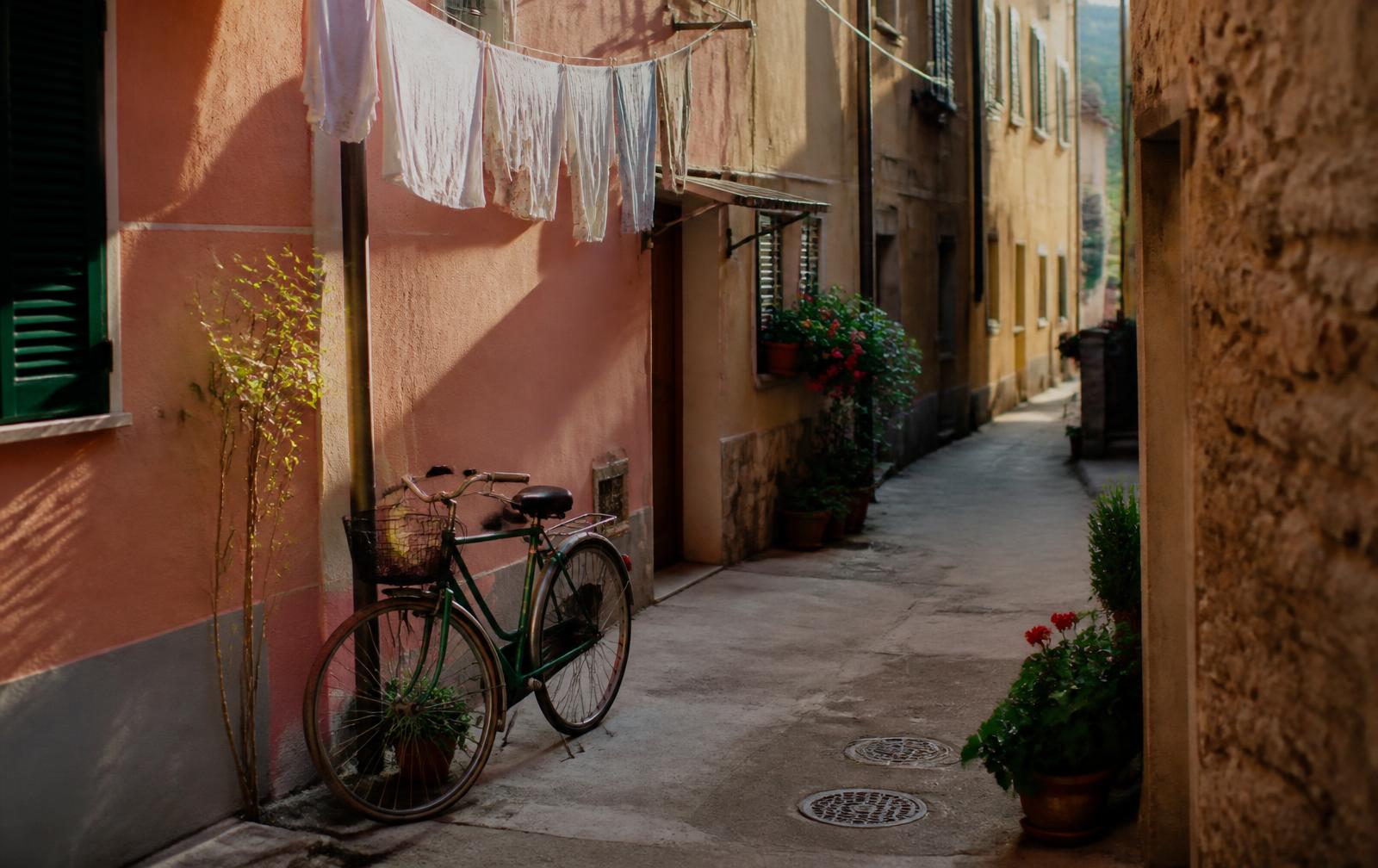
Quiet lane in an Italian town with a bicycle, laundry and geraniums
Living there. The paperwork ends; the street outside your door does not.
09Chapter nine

About those one euro houses

They are real. They are also a civic regeneration scheme, not a shortcut to a holiday home.

Dozens of Italian municipalities have offered houses for a symbolic euro, usually in historic centres that have emptied out. The house is real, the price is real, and the programme is a serious attempt to repopulate places that are dying.

What comes with it is a commitment. Schemes typically require you to submit a renovation plan, start work within a set period, often twelve months, complete within another set period, often three years, and lodge a deposit of several thousand euro that you forfeit if you do not. The buildings are usually structurally compromised, often lack utilities entirely, and sit in narrow streets where getting materials in is genuinely difficult.

A realistic renovation figure for a small ruin in a historic centre is somewhere between 50,000 and 150,000 euro, plus professional fees, plus the cost of managing a project from another country. Several municipalities also run parallel schemes at ten or twenty thousand euro for houses in better condition, which are frequently the better deal.

Separately, some regions and towns pay people to move in. Molise has offered up to 700 euro a month for three years to newcomers settling in villages under 2,000 residents and starting a local business, and towns in Calabria and Puglia have offered grants from a couple of thousand up to forty five thousand euro. Conditions are specific, they change year to year and comune to comune, and they usually require actual residency and actual economic activity.

The honest version

A one euro house is a good idea if you want a project, have the budget for it, and want to be part of bringing a place back. It is a bad idea if what you actually want is a cheap holiday home. For the same total spend you can usually buy something habitable in the next village.

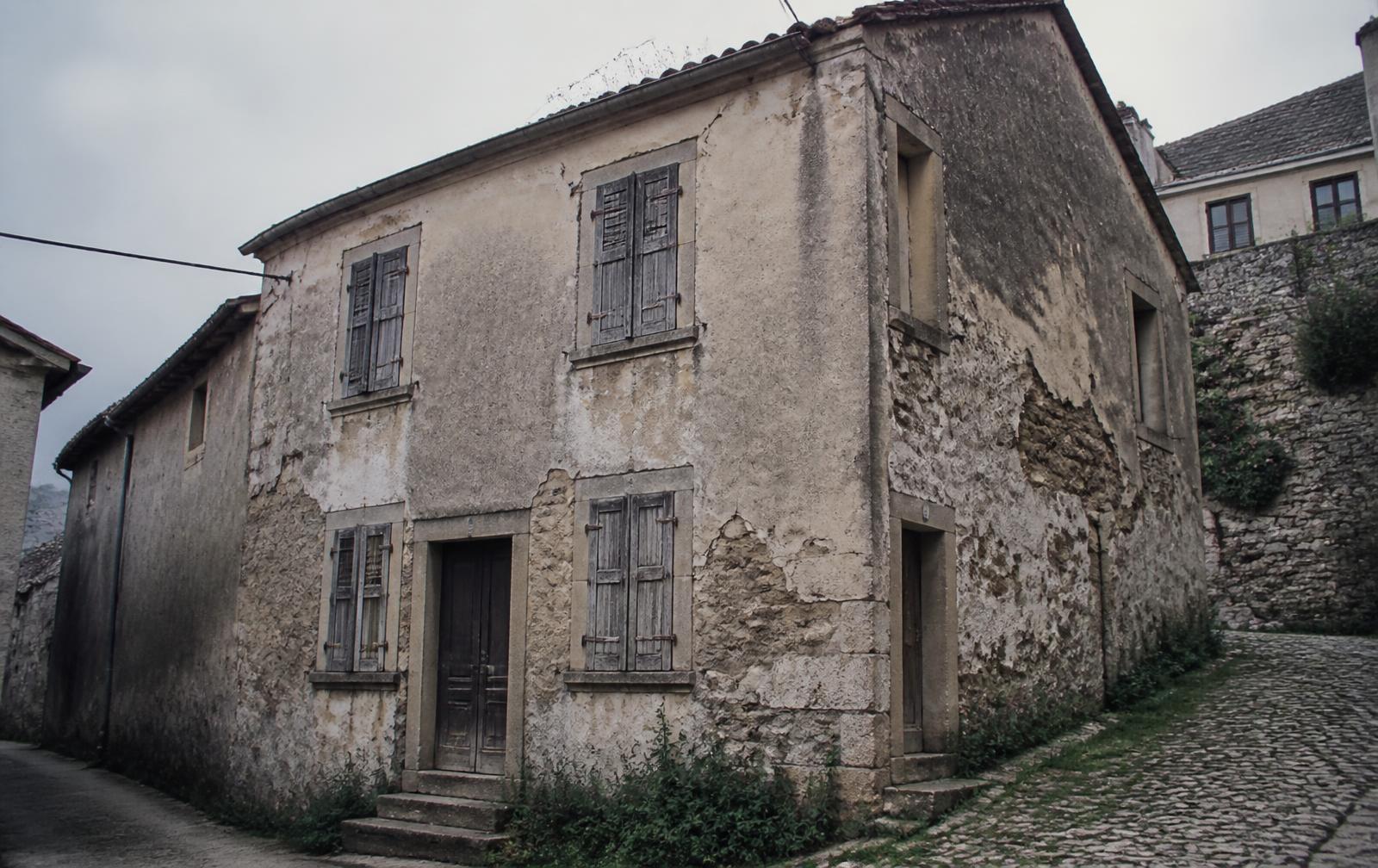
Semi-abandoned stone house in an Italian hill village
One euro houses are not free houses. They are building sites with a symbolic price tag attached.
10Chapter ten

A realistic timeline

From first viewing to first winter, assuming a resale property that needs work. Compress it if you must, but know what you are compressing.

The single best piece of advice in this guide

Rent in the area for a month before you buy in it. In November, not August. Almost everyone who regrets an Italian purchase bought a place they had only ever seen in summer, and discovered afterwards that the restaurant, the pharmacy and the bus all stop in October.

  • Before you lookApply for the codice fiscale. Set a budget that includes eleven percent of costs. Decide second home or future residence, because it changes the tax rate.
  • Month 1Viewings. Narrow to a region rather than falling for one house. Ask who is on the title and what the local planning rules permit.
  • Month 2Survey and document checks before you commit. Cadastral match, permits, co-owners, seismic zone, builder availability.
  • Month 2 to 3Offer, then preliminary contract with a ten to twenty percent deposit. Start the mortgage application earlier if you need one.
  • Month 3 to 5Funds transferred and cleared in Italy. Banker's draft drawn. Deed signed at the notary. Keys.
  • Month 5 to 7Utilities into your name, TARI registration, IMU calendar set. Design work and permit filing.
  • Month 7 onwardBuilding work. A full renovation on an old stone house is realistically nine to eighteen months, not the six everyone hopes for.
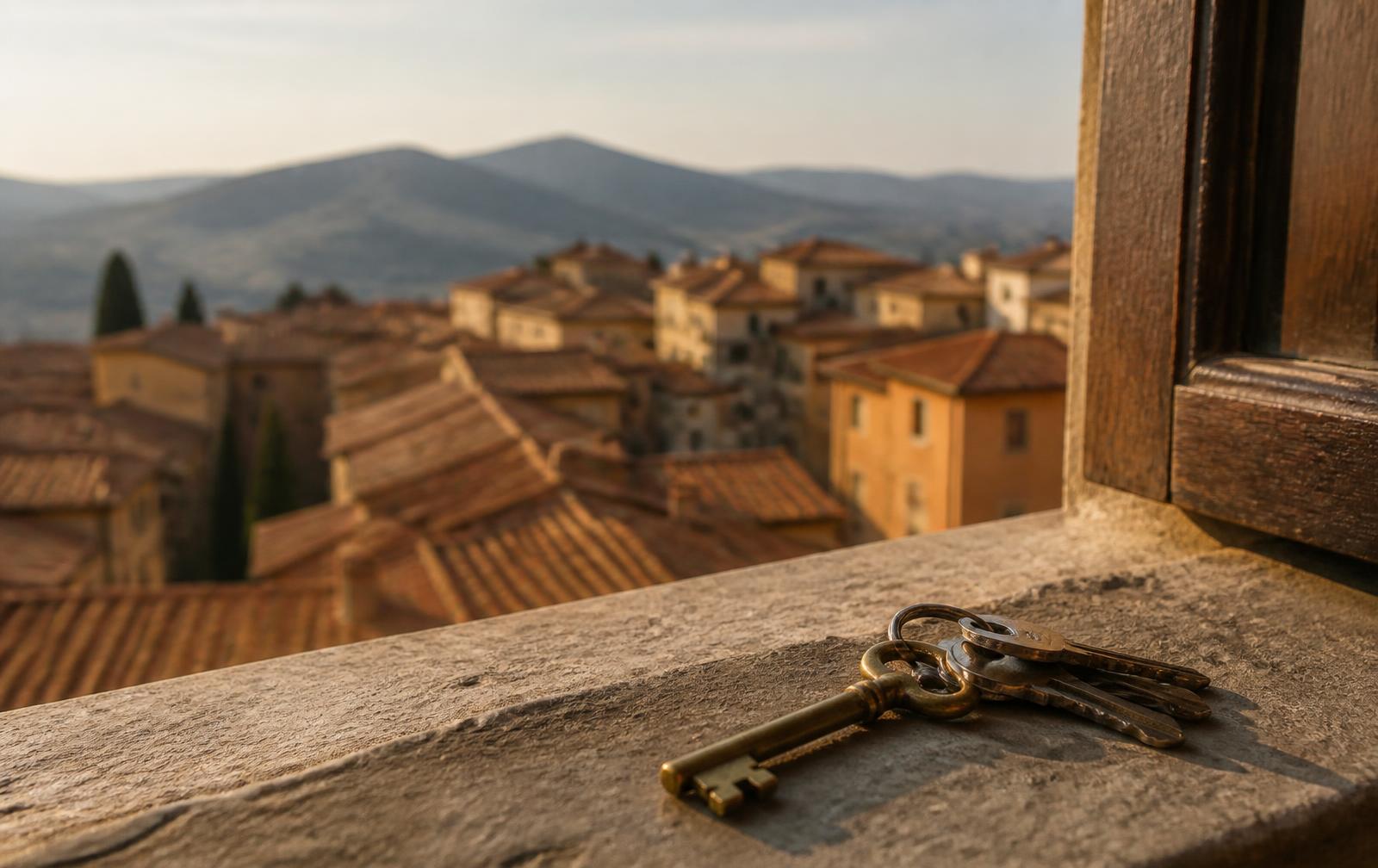
Keys on a stone windowsill above Italian rooftops
From first search to first winter, a realistic route takes nine to fifteen months.

Reference

The words you will meet

  • Codice fiscale

    Tax code

    Free, mandatory, needed before anything else.

  • Proposta d'acquisto

    Purchase offer

    Binding once the seller accepts it.

  • Compromesso

    Preliminary contract

    The real commitment. Registered with the tax authority.

  • Caparra confirmatoria

    Confirmatory deposit

    Forfeited if you withdraw, doubled back if the seller does.

  • Rogito

    Final deed

    Signed before the notary, transfers ownership.

  • Visura catastale

    Cadastral record

    What the state believes your building is.

  • Valore catastale

    Cadastral value

    The tax base. Usually well below market price.

  • Prezzo-valore

    Price-value option

    Taxes the cadastral value instead of the price.

  • Imposta di registro

    Registration tax

    9% second home, 2% first home relief.

  • Prima casa

    First home relief

    Requires residency in the comune within 18 months.

  • Sanatoria

    Regularisation

    Legalising past unpermitted work, where possible.

  • Agibilità

    Habitability certificate

    Confirms the building is fit to live in.

  • CILA / SCIA

    Works notifications

    Non structural and structural respectively.

  • Permesso di costruire

    Building permit

    For major works and new volume.

  • Soprintendenza

    Heritage authority

    Approves work on protected buildings and landscapes.

  • IMU / TARI

    Annual taxes

    Municipal property tax and waste charge.

  • Cedolare secca

    Flat rental tax

    21% substitute tax on residential rental income.

  • Commercialista

    Accountant

    Your ongoing Italian tax compliance.

How Bellacasa works

Everything in this guide is doable on your own. Most of it is also doable badly, from two thousand kilometres away, in a language you do not read. We sit on the buyer's side for the whole route, from the first listing to the first winter.

Start with the property you are looking at

Paste the link, and an Italian architect reviews what comes back.

This guide reflects Italian rules in force during 2026 and is written for general information. Tax rates, renovation incentives and visa thresholds are set annually and several change on 1 January 2027. Nothing here is legal, tax or financial advice, and it does not replace a qualified Italian notary, commercialista or immigration lawyer acting on your specific circumstances.